Summarize this documentation using AI
In 2018, Reforge published "Growth Loops Are the New Funnels" and permanently changed how growth teams draw their whiteboards. The argument: funnels are linear and leaky, while the fastest-growing products grow through closed loops, where the output of one cohort (content, invites, data) becomes the input that acquires the next.
It was a real insight, and this essay is not a takedown of it. It is a versus piece about what happened next: consumer brands adopted the diagram and skipped the fine print. Because the fine print, written by the same Reforge authors, is that retention is the foundation every loop spins on. For B2C brands in 2026, loop thinking without a lifecycle retention system is a flywheel mounted on a broken bearing.
This is the companion to this week's other versus essay, Why the Bowling Alley Framework Doesn't Work for DTC. Same theme, different borrowed framework.
What Growth Loops Get Right
Credit first. Loops fixed three genuine funnel pathologies: they force teams to ask "how does this cohort acquire the next one" instead of pouring budget into the top; they expose compounding (or its absence) in the growth model; and they end the org chart where marketing owns the top of the funnel and product owns the bottom. Brian Balfour's related Racecar Growth Framework is explicit that loops are the engine, and that most companies also need fuel and lubricant. All of this transfers to consumer brands conceptually.
The failure is in the mechanics. Loops were derived from products like Pinterest, Dropbox, and Slack, where usage itself generates the next user. B2C commerce works differently, in four specific ways.
The Four B2C Realities Loop Thinking Misses
1. Most DTC Loops Don't Actually Close
A loop requires the output of use to become an input to acquisition automatically. When someone uses a note-taking app, public pages get indexed and acquire the next user. When someone uses a face serum, nothing about that use acquires anyone. Referral programs, UGC, and reviews are real but weak, lossy loops that need constant promotional energy injected: which is to say, they are channels wearing a loop costume. Pretending otherwise leads teams to expect compounding that never arrives, while the actual compounding asset available to every consumer brand, the existing customer base, goes under-worked.
2. Retention Is the Loop's Load-Bearing Wall, and B2C Retention Is Brutal
Reforge's own retention essay calls retention "the silent killer": every loop's math is multiplied by how many users stick. Consumer repeat rates make this unforgiving; typical ecommerce repeat purchase rates sit around 25-30%, and retention benchmarks vary sharply by vertical. Run any loop diagram with 70% of each cohort exiting after one order and the spiral points down, not up. The leverage is not in drawing a better loop; it is in reducing churn so whatever loop exists has something to multiply. The Bain-derived rule holds: 5% better retention is worth 25-95% more profit.
3. The Highest-ROI "Loop" in B2C Is the Purchase Cycle Itself
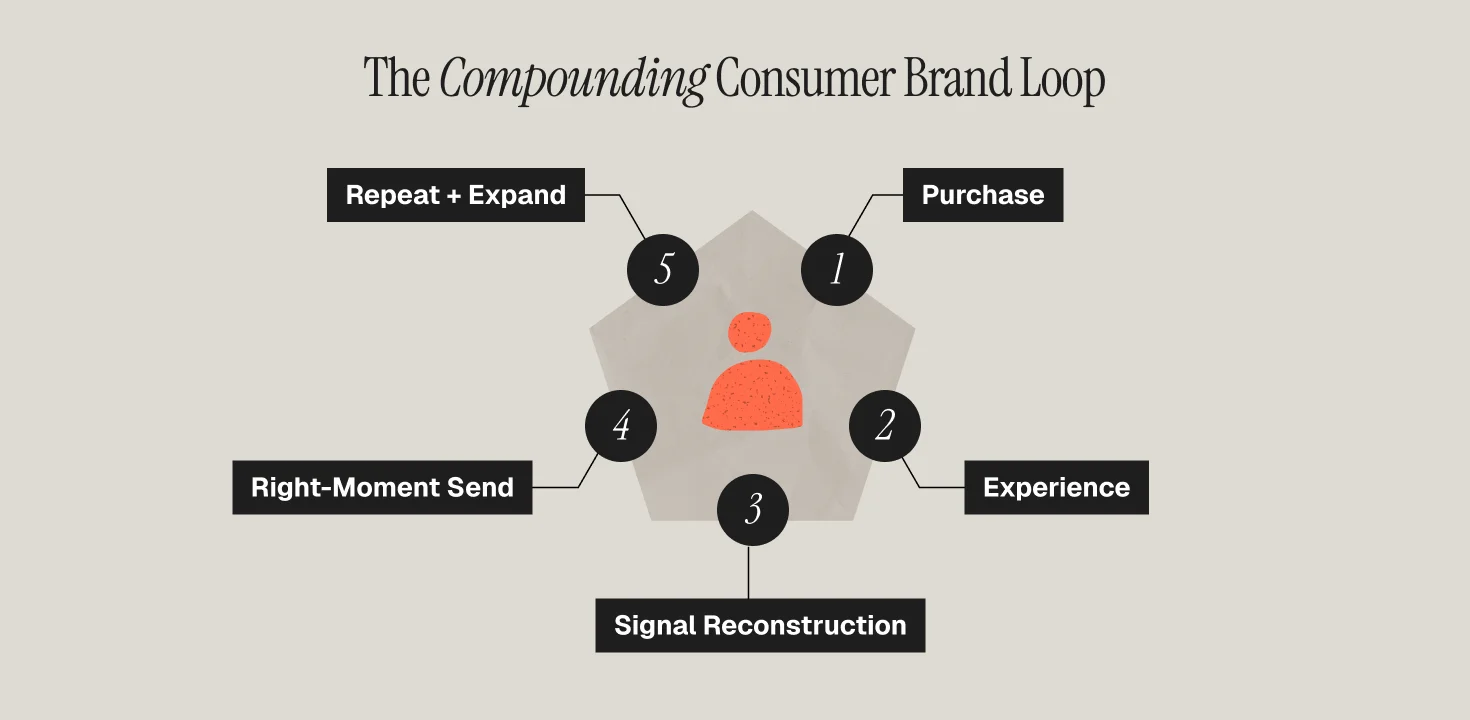
The loop that actually compounds for a consumer brand is unglamorous: buy → experience → be reminded at the right moment → buy again → expand into a second category. That is a lifecycle revenue engine, and it is powered by owned-channel infrastructure: triggered messaging on behavioral and replenishment signals, win-back sequencing, and subscription mechanics. None of it appears in a classic loop diagram because it produces no new users, only most of the profit.
4. Loops Assume Observable Usage; Commerce Usage Is Dark
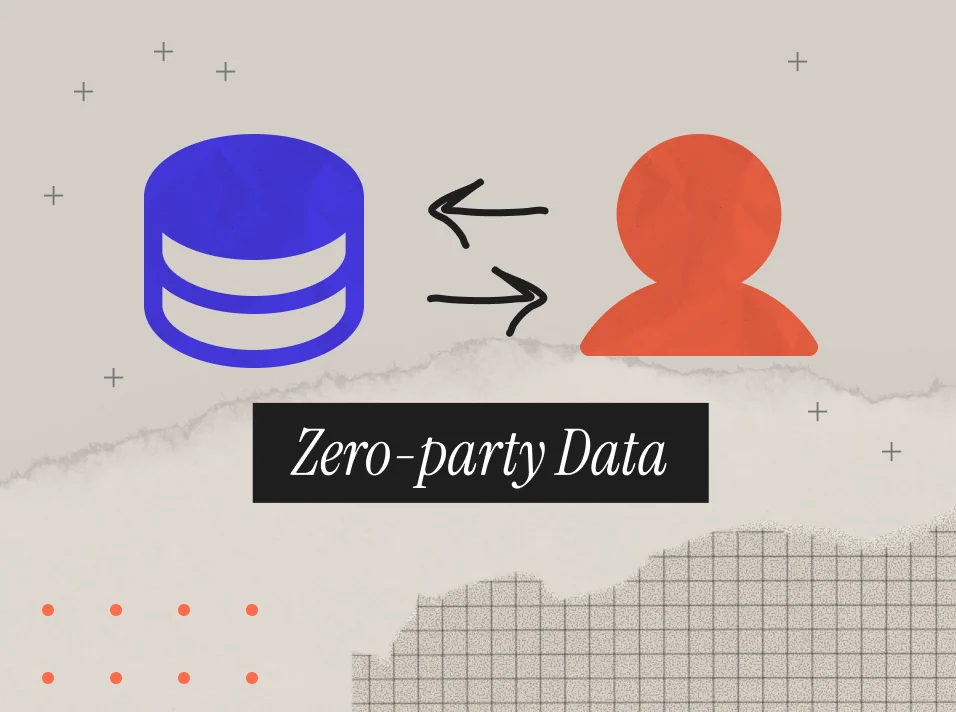
Loop instrumentation presumes the product emits events as it is used. A consumed product emits nothing. B2C brands must reconstruct the usage signal from proxies: order timing, on-site behavior, quiz data, zero-party data, and predicted depletion. That reconstruction layer is the real growth engineering work in consumer, and loop orthodoxy has no slot for it.
The Retention-First Operating Model
Here is the sequence we run at Propel when a brand comes in with a loops deck and a leaking cohort curve:
1. Instrument the dark usage layer. Unify order history, site events, and zero-party data into per-customer profiles so depletion and disengagement become predictable events.
2. Build the core triggered flows. Onboarding education, replenishment, browse and cart recovery, at-risk saves, and win-back, the architecture laid out in our B2C Retention Stack and Lifecycle Revenue Model frameworks.
3. Rebalance the budget with cohort math. Once cohort curves flatten, acquisition-vs-retention allocation stops being a debate and becomes arithmetic.
4. Then, and only then, amplify the real loops. Referral, UGC, and review loops work dramatically better when powered by retained, multi-order customers, because advocates are made by second and third great experiences, not first ones.
Loops are the dessert. Retention is dinner.
How Propel Builds This
Propel designs and operates retention marketing systems for B2C and DTC brands: signal reconstruction, lifecycle flow architecture, and cohort reporting on Klaviyo, Customer.io, and Braze.
Frequently Asked Questions
What is a growth loop?
A growth loop is a closed system where the output of one user cohort, invites, content, data, or virality, becomes the input that acquires the next cohort, so growth compounds instead of depending on constantly refilled funnel spend. The concept was popularized by Reforge in 2018.
Why don't growth loops work well for DTC and B2C brands?
Because consuming a physical product does not automatically acquire the next customer, most DTC "loops" (referrals, UGC) are lossy channels needing constant promotion. Meanwhile B2C repeat rates of roughly 25-30% mean each cohort mostly exits, so the math that makes loops compound never materializes without a retention system underneath.
What should B2C brands focus on instead of growth loops?
The purchase-cycle engine: reconstructing usage signals from order timing and zero-party data, triggering lifecycle messages at replenishment and churn-risk moments, and measuring cohort-level lifecycle revenue. Referral and UGC loops come after, powered by retained multi-order customers.
Are growth loops and funnels mutually exclusive?
No. Funnels remain useful for measuring step-by-step conversion; loops describe how cohorts feed acquisition; and lifecycle systems govern post-purchase compounding. Mature consumer brands run all three views, but sequence investment retention-first.
How does retention affect growth loops?
Every loop's output is multiplied by the share of users who stick. Reforge calls retention the silent killer because weak retention quietly zeroes out loop compounding, and Bain's research shows a 5% retention improvement lifts profit by 25-95%, which is why retention infrastructure comes before loop optimization.