Summarize this documentation using AI
Key Takeaways
- Browse abandonment is when a shopper views a product page and leaves without adding anything to the cart.
- It sits one step earlier in the funnel than cart abandonment, so intent is weaker, volume is far larger, and the message has to work harder.
- Cart abandonment is the better-known problem, with an average documented rate of 70.22% across 50 studies, but it only ever addresses shoppers who got as far as the cart.
- A browse abandonment flow typically converts at a lower rate than cart recovery and still earns its place, because the eligible audience is several times bigger.
- The design rule is restraint: helpful, product-led, no discount, and suppressed the moment the shopper adds to cart so the two flows never collide.
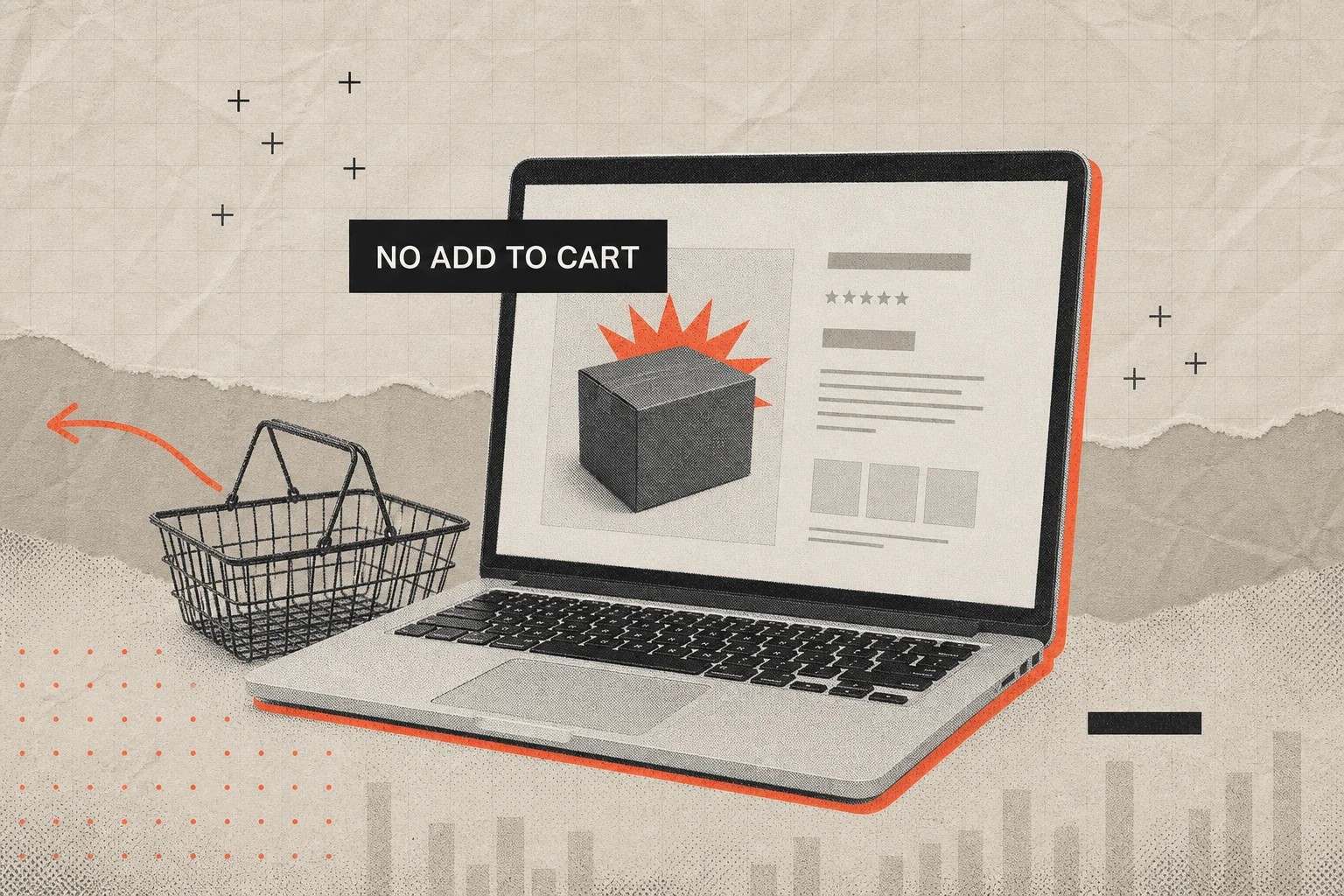
Browse abandonment is the behaviour of a shopper who views one or more product pages and then leaves the site without adding an item to their cart. A browse abandonment flow is the triggered message sent afterwards, referencing what they looked at.
It is the largest identifiable pool of warm, unconverted intent most ecommerce brands have, and it is the flow most commonly missing from a library that already has the obvious ones.
Browse abandonment against cart abandonment
| Browse abandonment | Cart abandonment | |
|---|---|---|
| Trigger | Product page viewed, no add to cart | Item added to cart, no purchase |
| Intent | Interest, possibly idle | Explicit purchase consideration |
| Eligible volume | Large | Much smaller |
| Conversion rate | Lower | Higher |
| Right tone | Helpful, informational | Direct, remove the obstacle |
The Baymard Institute puts the average documented cart abandonment rate at 70.22%, derived from 50 studies spanning 2006 to 2025 (Baymard Institute). That figure gets quoted constantly, and it only describes people who reached the cart. The population that browsed and never added is larger still and mostly unaddressed.
Why the flow earns its place
Automated flows in general carry disproportionate revenue. Across more than 183,000 Klaviyo accounts, email flows produce nearly 41% of email revenue from 5.3% of sends, with revenue per recipient roughly 18 times higher than broadcast campaigns (Klaviyo).
Browse abandonment will sit at the lower end of that flow performance band. That is expected and it is not an argument against building it. A lower conversion rate applied to several times the eligible volume frequently produces more absolute revenue than cart recovery, and it reaches people no other flow in your library is speaking to.
How to build one properly
Trigger thresholds
Do not fire on a single page view. Common qualifying rules are two or more product views in a session, or a single view lasting beyond a set dwell time. The goal is to exclude the accidental click and the price-checker.
Timing
Sooner than cart recovery is a mistake. Cart abandonment works within the hour because the intent is hot. Browse abandonment lands better after a few hours or the next day, because a message arriving thirty seconds after someone closed a tab reads as surveillance rather than service.
Content
Lead with the product viewed, then add what the product page could not: the review that answers the common objection, the sizing guide, the comparison against the adjacent item, the returns policy. The shopper did not fail to add to cart at random. Something was unresolved, and your job is to guess it usefully.
No discount
This is the single most important rule and the most commonly broken one. Discounting at browse stage trains shoppers that looking twice produces a code, and it hands margin to people who were never close to buying. Keep the discount for later stages if you use one at all.
Suppression
Exit the flow the moment the shopper adds to cart, so cart abandonment takes over cleanly. Two flows describing the same product in one afternoon is the most visible symptom of an unmanaged library. Triggered messaging covers the general mechanics.
Where it sits in the library
A reasonable build order for a DTC flow library: welcome series, cart abandonment, browse abandonment, post-purchase, replenishment, win-back, sunset.
Browse abandonment lands third because it depends on product view tracking being correctly instrumented, which is a slightly higher technical bar than the first two and the usual reason it gets postponed indefinitely.
Measuring it honestly
Judge the flow on incremental revenue rather than attributed revenue. Browse abandonment is particularly prone to over-attribution, because a shopper who viewed a product twice was already interested and a meaningful share would have returned unprompted. A randomised holdout is the only way to size that. Segment the audience too: a first-time visitor and a repeat customer browsing the same page are different problems, which behavioral segmentation covers.
The bottom line
Browse abandonment addresses the biggest pool of warm intent most brands never message. It converts less well than cart recovery, reaches far more people, and belongs in any flow library that has the basics working.
Build it helpful rather than pushy, suppress it against cart abandonment, keep the discount out of it, and measure it with a holdout. How to audit your lifecycle marketing program covers where it fits in the wider review.
Sources
- Baymard Institute, Cart Abandonment Rate Statistics (50 studies, 2006 to 2025)
- Klaviyo, 2026 Email Marketing Benchmarks by Industry (183,000+ customers)
Frequently Asked Questions
What is browse abandonment?
Browse abandonment is the behaviour of a shopper who views one or more product pages and then leaves the site without adding an item to their cart. A browse abandonment flow is the triggered message sent afterwards, referencing what they looked at. It is the largest identifiable pool of warm, unconverted intent most ecommerce brands have, and the flow most commonly missing from a library that already has the obvious ones.
How is browse abandonment different from cart abandonment?
Browse abandonment fires when a product page is viewed with no add to cart, while cart abandonment fires when an item was added but not purchased. That one step changes everything: intent is weaker, eligible volume is far larger, conversion rate is lower, and the right tone shifts from direct obstacle removal to helpful information. The Baymard Institute puts the average documented cart abandonment rate at 70.22% across 50 studies, but that figure only ever describes shoppers who reached the cart.
Is a browse abandonment flow worth building?
Usually yes, even though it converts worse than cart recovery. Across more than 183,000 Klaviyo accounts, email flows produce nearly 41% of email revenue from 5.3% of sends, with revenue per recipient roughly 18 times higher than broadcast campaigns. Browse abandonment sits at the lower end of that band, but a lower conversion rate applied to several times the eligible volume frequently produces more absolute revenue, and it reaches people no other flow in your library is speaking to.
When should a browse abandonment email be sent?
Later than a cart recovery message. Cart abandonment works within the hour because the intent is hot. Browse abandonment lands better after a few hours or the next day, because a message arriving thirty seconds after someone closed a tab reads as surveillance rather than service. Do not fire on a single page view either: qualify on two or more product views in a session, or one view beyond a set dwell time, so you exclude the accidental click and the price-checker.
Should a browse abandonment email include a discount?
No. This is the most commonly broken rule in the flow. Discounting at browse stage trains shoppers that looking twice produces a code, and it hands margin to people who were never close to buying. Lead instead with the product viewed plus what the product page could not deliver: the review that answers the common objection, the sizing guide, the comparison against the adjacent item, the returns policy. Keep any discount for later stages, if you use one at all.