Summarize this documentation using AI
For ecommerce in 2026, a healthy email program lands around a 15–33% open rate, a ~2.1% click rate, a 4–5% click-to-open rate, and roughly $0.08–$0.12 in revenue per email sent. The single most important benchmark, though, is not any campaign number: it is the gap between your automated flows and your one-off campaigns. Flows drive about 41% of email revenue from just 5.3% of sends. If you only measure campaign averages, you are grading the wrong exam.
Key Takeaways
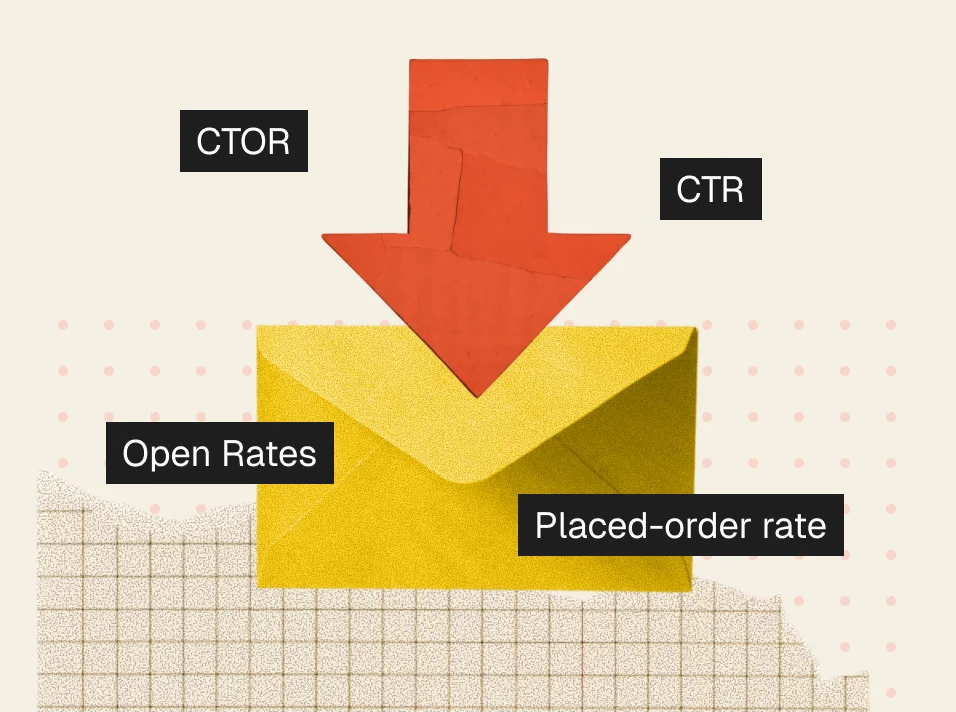
- Open rate (ecommerce): ~15.5% by Klaviyo’s 2026 data, up to ~32.7% in MailerLite’s dataset. The spread is mostly Apple Mail Privacy Protection inflating opens.
- Click rate: ~2.15% for ecommerce, but flow emails deliver roughly 3x the click rate of campaigns (5.58% vs 1.69%).
- Click-to-open rate: ~4.55% average; 15–25% is genuinely strong.
- Placed-order rate: ~0.16% for campaigns vs ~2.11% for automated flows.
- Revenue per email: ~$0.08–$0.12 for B2C ecommerce.
- The real benchmark: flows vs campaigns — ~41% of revenue from ~5% of sends.
The 2026 Ecommerce Email Benchmarks
Sources: Klaviyo, MailerLite, WebFX, Brevo.
Why Open Rate Is the Least Trustworthy Number
Open rate is the metric everyone quotes and the one you should trust least. Since Apple’s Mail Privacy Protection pre-fetches images, it registers an open even when nobody read the email. That is why one credible source reports ~15.5% for ecommerce and another reports ~32.7%. Use open rate for trend direction and deliverability warning signs, not as a success metric. For relevance, watch click-to-open rate by segment instead.
Flows vs Campaigns: The Benchmark That Matters
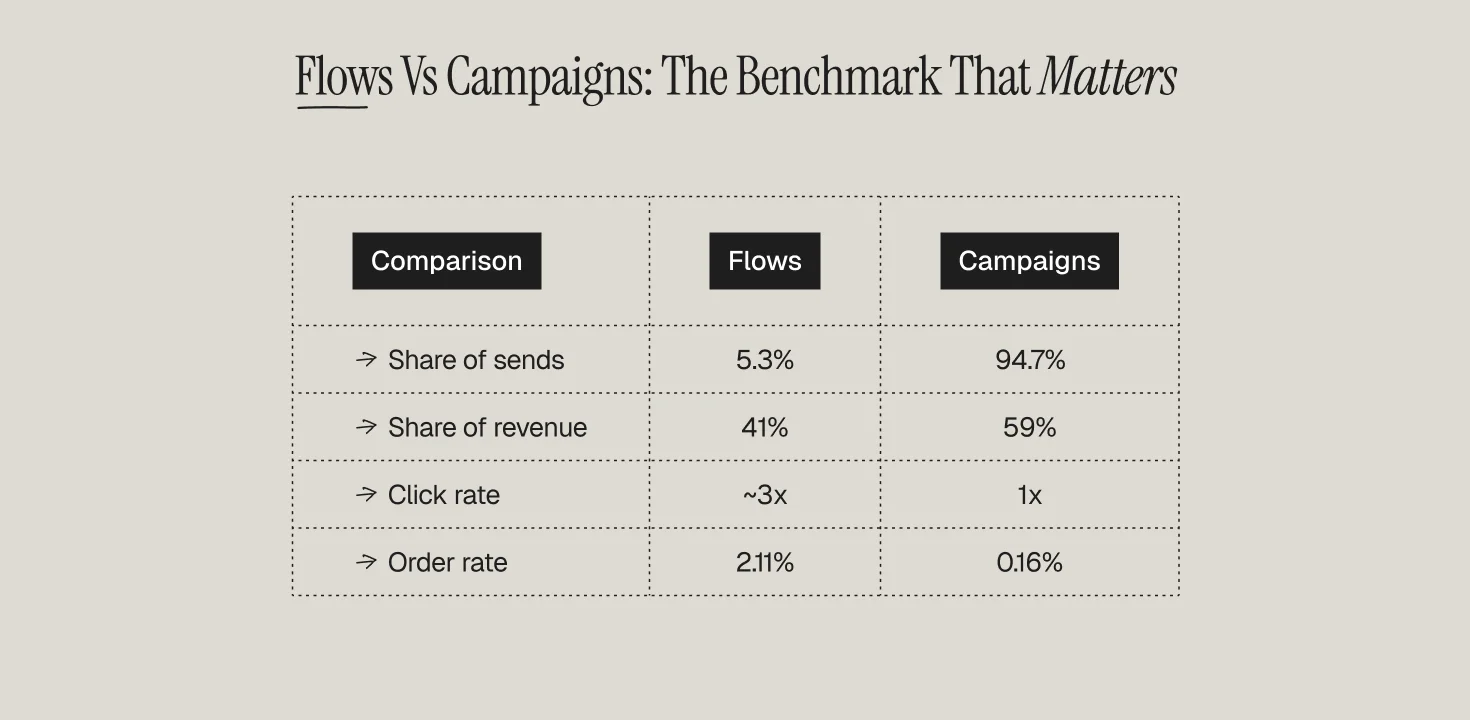
The most important line in any 2026 benchmark report is the split between automated flows and broadcast campaigns. Flows earn ~41% of email revenue from ~5.3% of sends, click ~3x better, and place orders at ~2.11% versus ~0.16% for campaigns. The reason is simple: flows fire on intent. A welcome series, an abandoned-cart sequence, a win-back flow, and a sunset flow each reach a person at a moment that already matters. If your flow revenue share is well below ~35–40%, you have under-built automation, not under-sent campaigns.
How to Read These Benchmarks for a DTC or Telehealth Brand
Benchmarks are directional, not destiny. In telehealth and supplements the highest-value email is often an adherence or refill nudge, not a promo, so a low campaign placed-order rate can sit on top of a very healthy retention program. And deliverability swings these numbers more than copy does — an unwarmed domain underperforms every benchmark regardless of subject line. Judge your program against your own trailing 90 days first, then against industry numbers.
How to Beat the Benchmarks
- Move budget from campaigns to flows. If flows are under 35% of email revenue, build the missing ones first.
- Segment before you scale. A simple three-segment engagement split lifts CTOR more than a new template. Pair it with behavioral segmentation.
- Collect intent, then use it. Ask one good question at signup and route the next email off the answer — the practical use of zero-party data.
- Protect deliverability. Warm domains slowly, sunset the unengaged, keep complaints low.
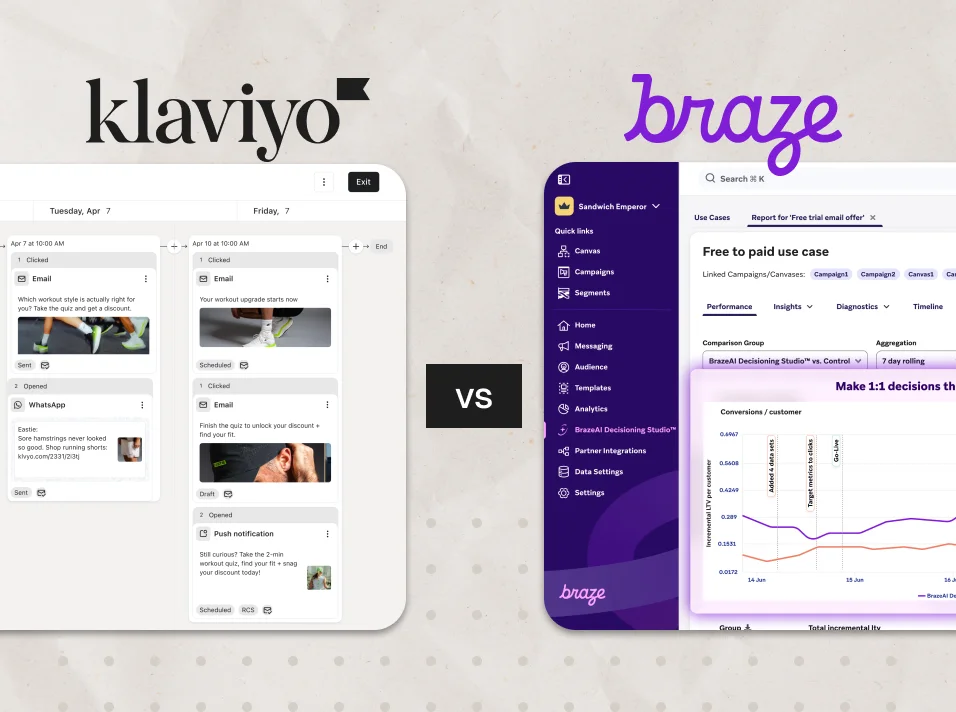
- Pick the ESP that fits your model. For mid-market DTC, the Klaviyo vs Braze decision changes what good costs to reach.
Frequently Asked Questions
What is a good email open rate for ecommerce in 2026?
Roughly 15–33% depending on source and Apple MPP effects. Treat 20%+ as healthy but prioritize click and revenue metrics.
What is a good click rate?
About 2% overall; flows should clear ~5%.
What is a good click-to-open rate?
~4.5% average; 15–25% is strong.
How much revenue should email drive?
Well-run DTC programs attribute 25–40%+ of revenue to email, mostly from flows.
Why do flows outperform campaigns?
They are triggered by intent and timing rather than broadcast to the full list.