Summarize this documentation using AI
The 90-Day Activation Playbook is a stage-by-stage framework for turning a first-time DTC buyer into a retained, repeat customer inside the first 90 days, the window that decides lifetime value. The premise is simple and backed by data: what happens in the first three months predicts whether a customer ever comes back. A customer who makes a second purchase is about 45% more likely to make a third, and the DTC average repeat-purchase rate is only 25% to 30% over 12 months, which means most brands lose three of four buyers by failing the early window. This playbook maps the exact touches that move a customer from purchase one to habit.
Key Takeaways
- The first 90 days decide LTV. Most churn is front-loaded; the 30-day activation window sets the trajectory for the whole relationship.
- The second purchase is the hinge. A buyer who makes a second purchase is roughly 45% more likely to make a third, so the playbook is engineered to earn purchase two fast.
- Onboarding is a retention lever, not a nicety. Better onboarding measurably reduces churn by removing the confusion that causes early drop-off.
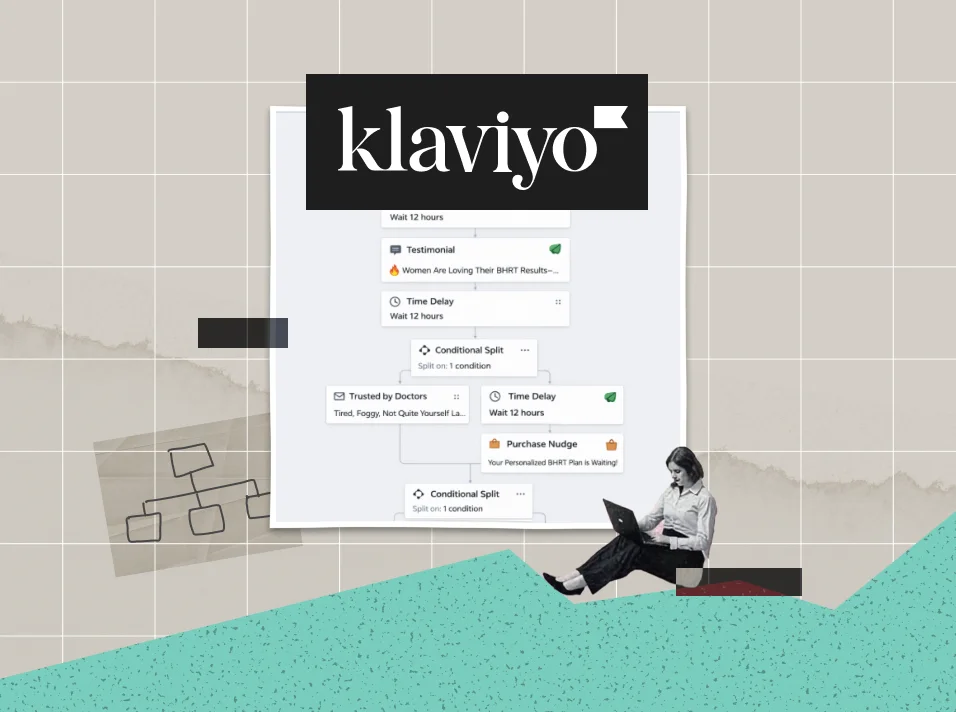
- Automation carries it. Automated flows produce up to 30x the revenue per recipient of batch campaigns (Klaviyo), so the 90 days should run on flows, not manual sends.
- Miss the window and you overpay forever. With acquisition costing 5 to 25x more than retention (HBR), a weak first 90 days forces you to keep buying customers you already had.
Why the First 90 Days Decide Retention
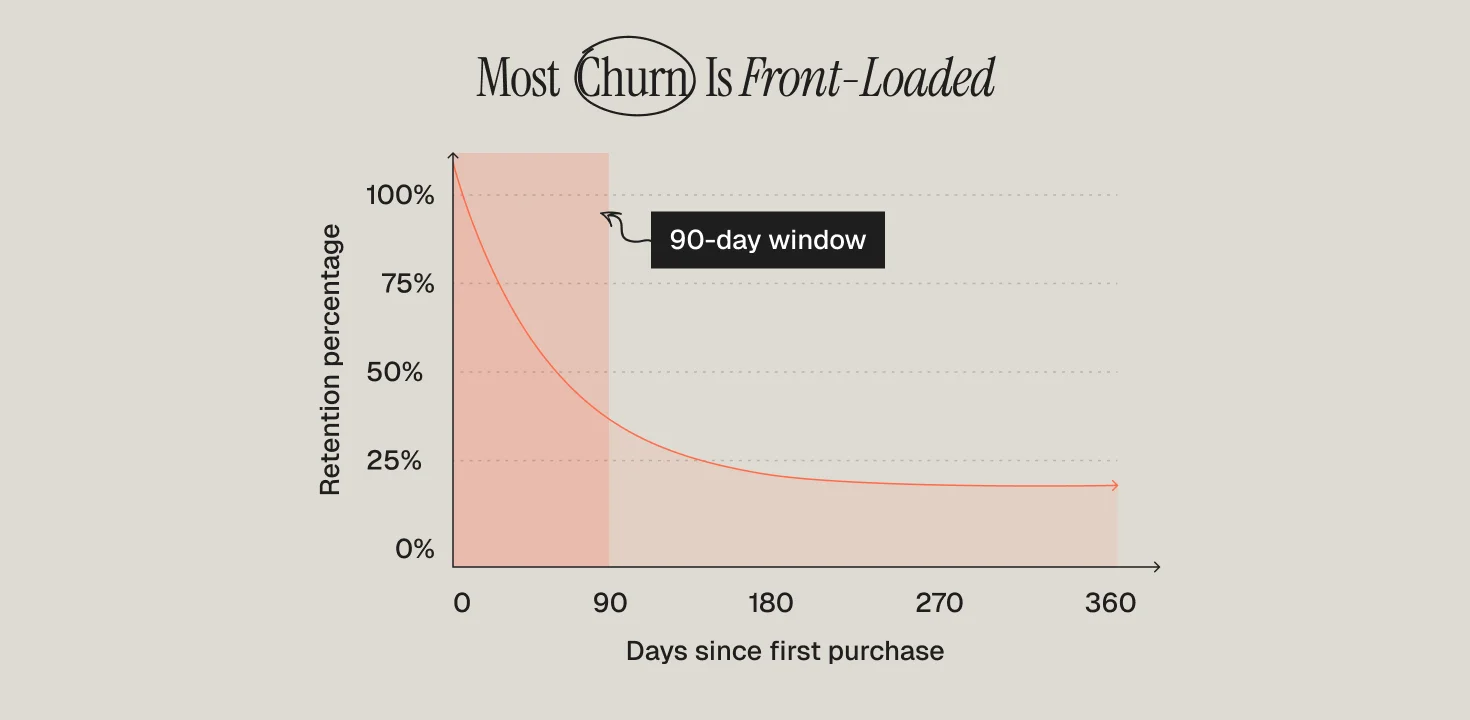
Retention curves are steepest at the start. The largest share of customers a brand will ever lose, it loses early, before the product has had a chance to become a habit. That is why customer activation (getting a new customer to the first real moment of value) is the highest-leverage work in all of retention marketing. The economics are unforgiving: the first order rarely turns a profit once you net out acquisition, shipping, and returns, so the margin lives in the second and third order. Get the first 90 days right and you unlock the compounding that makes unit economics work; get them wrong and you are stuck refilling a leaking bucket at 5 to 25x the cost of keeping the customer you already had.
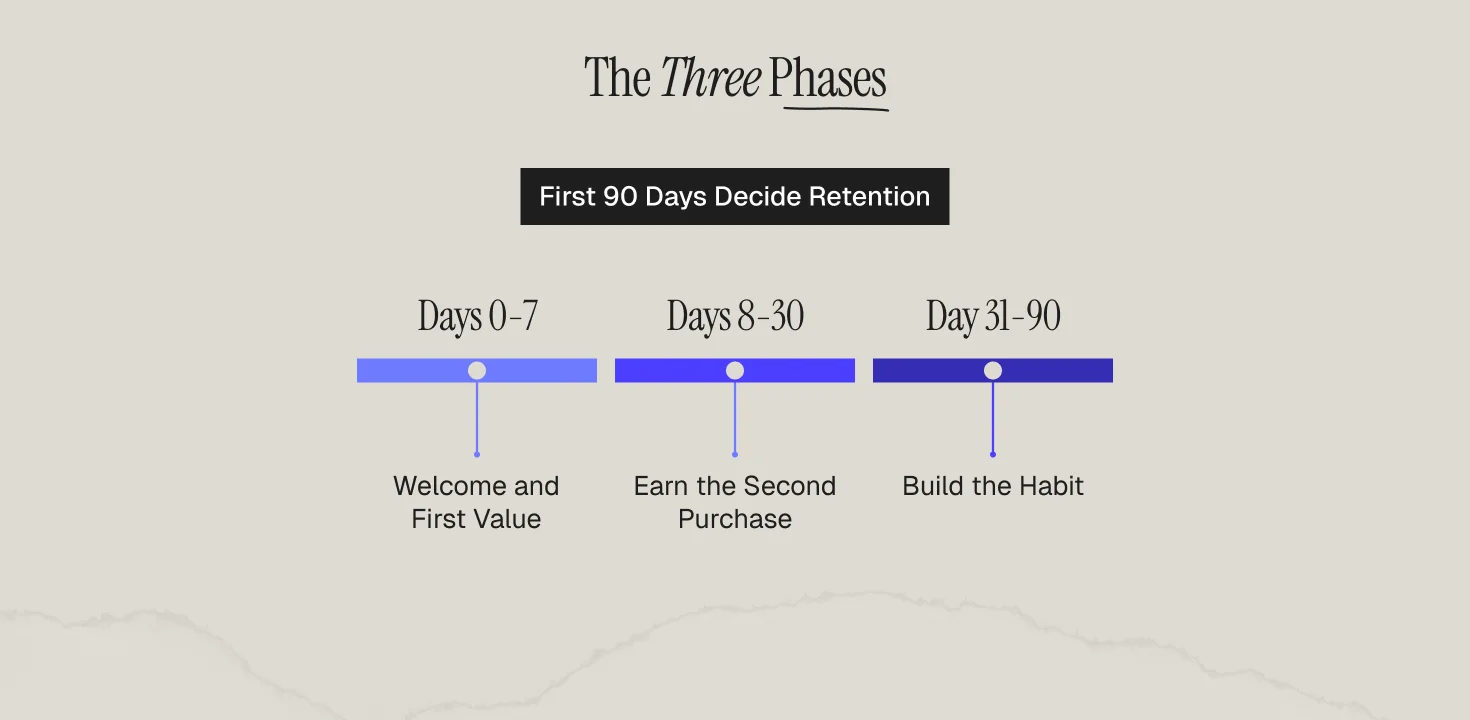
Phase 1: Days 0 to 7 (Welcome and First Value)
The goal of week one is not to sell again, it is to confirm the customer made a good decision. This is the job of a strong welcome series: set expectations, deliver the first piece of value (how to use the product, what to expect, how to reach you), and reduce the buyer's remorse that quietly kills early retention. Treat shipping and delivery updates as part of the experience, not a logistics afterthought. The brands that win here design week one as an onboarding narrative, because onboarding done well is one of the most reliable ways to reduce churn.
Phase 2: Days 8 to 30 (Earn the Second Purchase)
The second purchase is the single most important event in the DTC lifecycle, because a customer who buys twice is about 45% more likely to buy a third time. Weeks two through four are engineered to earn it: a well-timed second-purchase nudge, a replenishment or complementary-product recommendation, and a reason to act that is relevant rather than a blanket discount. For consumables, a replenishment flow timed to the product's consumption cycle is the highest-ROI move available. The best-performing DTC flow libraries concentrate their firepower in exactly this window, because moving the second-purchase rate moves everything downstream.
Phase 3: Days 31 to 90 (Build the Habit)
Past 30 days, the job shifts from converting to habituating. This is where you convert a two-time buyer into someone with a routine: predictable value, a reason to keep engaging between purchases, and early enrollment into the mechanics of loyalty. Days 31 to 90 are also where you should be watching for the first signs of disengagement so you can intervene before a customer lapses, the same predictive muscle described in how to identify users who are about to churn. Get a customer to day 90 as an active, engaged buyer and you have moved them from the fragile early cohort into the durable middle of the customer LTV curve.
The Metrics That Tell You It Is Working
Do not wait for a 90-day retention number to arrive; use leading indicators. Track second-purchase rate (the hinge metric), time-to-second-purchase (shorter is better), 30-day active rate, and early engagement with your onboarding flows. Each is a signal you can act on inside the window rather than a postmortem after it closes. Because automated flows drive up to 30x the revenue per recipient of batch sends (Klaviyo), the entire playbook should run as connected flows so every new customer gets the same engineered 90 days without manual effort.
Frequently Asked Questions
What is the 90-Day Activation Playbook?
A stage-by-stage framework (days 0 to 7, 8 to 30, and 31 to 90) for turning a first-time DTC buyer into a retained repeat customer during the window that most determines lifetime value.
Why 90 days specifically?
Because retention curves are steepest early and the second purchase, which a 90-day plan is built to earn, makes a third purchase about 45% more likely. By 90 days a customer is either becoming a habit or already gone.
What is the most important metric in the first 90 days?
Second-purchase rate. The first order rarely profits after acquisition costs, so the activation goal is to earn purchase two quickly and move the customer into profitable territory.
How is activation different from onboarding?
Onboarding is the experience of learning to use the product; activation is reaching the first real moment of value. Good onboarding reduces churn, and it is one input into activation, not the whole of it.
Which flows power the 90-day playbook?
A welcome series in week one, a second-purchase and replenishment flow through day 30, and engagement plus early-risk detection through day 90, all run as automated flows.