
Summarize this documentation using AI
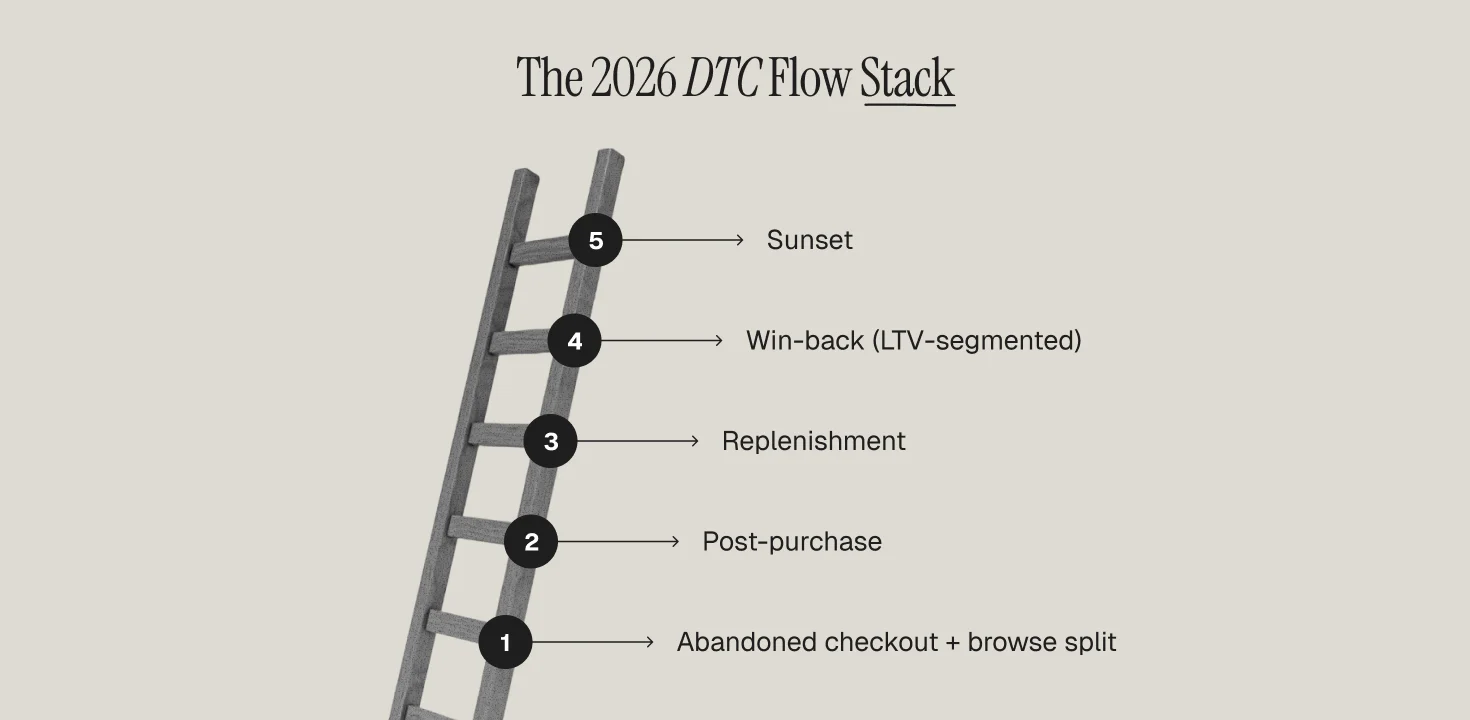
The best Klaviyo flows for DTC brands in 2026 are, in build order: an abandoned checkout flow split from browse abandonment, a post-purchase sequence, a replenishment flow, an LTV-segmented win-back, and a sunset flow. Klaviyo is now installed on 84% of 698 outdoor Shopify stores analyzed by Pageley (2026), which means the platform itself is no longer a competitive advantage — your flow architecture is. This guide ranks each flow by revenue impact, explains the build order, and gives the benchmarks to judge each one against.
Key Takeaways
- Klaviyo runs on 84% of 698 outdoor Shopify stores (Pageley, 2026): tool parity makes flow architecture the differentiator.
- Build order matters: cart/browse split → post-purchase → replenishment → win-back → sunset. Most brands build win-back too early.
- Roughly 70% of ecommerce carts are abandoned (Baymard Institute, 70.19%), making the checkout flow the highest-intent automation in the account.
- Post-purchase is the most under-built flow in DTC: review asks convert best after first product use, not at delivery.
- Email returns about $36 for every $1 spent (Litmus) — and a sunset flow protects the deliverability that ROI depends on.
Why the flow stack matters more than the ESP in 2026
Klaviyo's market position in DTC is close to saturation: Pageley's 2026 analysis found it installed on 84% of 698 outdoor Shopify stores. Your competitors have the same flow templates, the same AI subject-line tools, the same default triggers. Two brands with identical creative routinely produce very different flow revenue, and the difference is architectural: which flows exist, how they're segmented, and in what order they were built and tuned. If you want help here, Propel works with Klaviyo specialists on exactly this — and the same logic underpins all lifecycle marketing, not just Klaviyo.
Flow #1: Abandoned checkout + browse abandon split
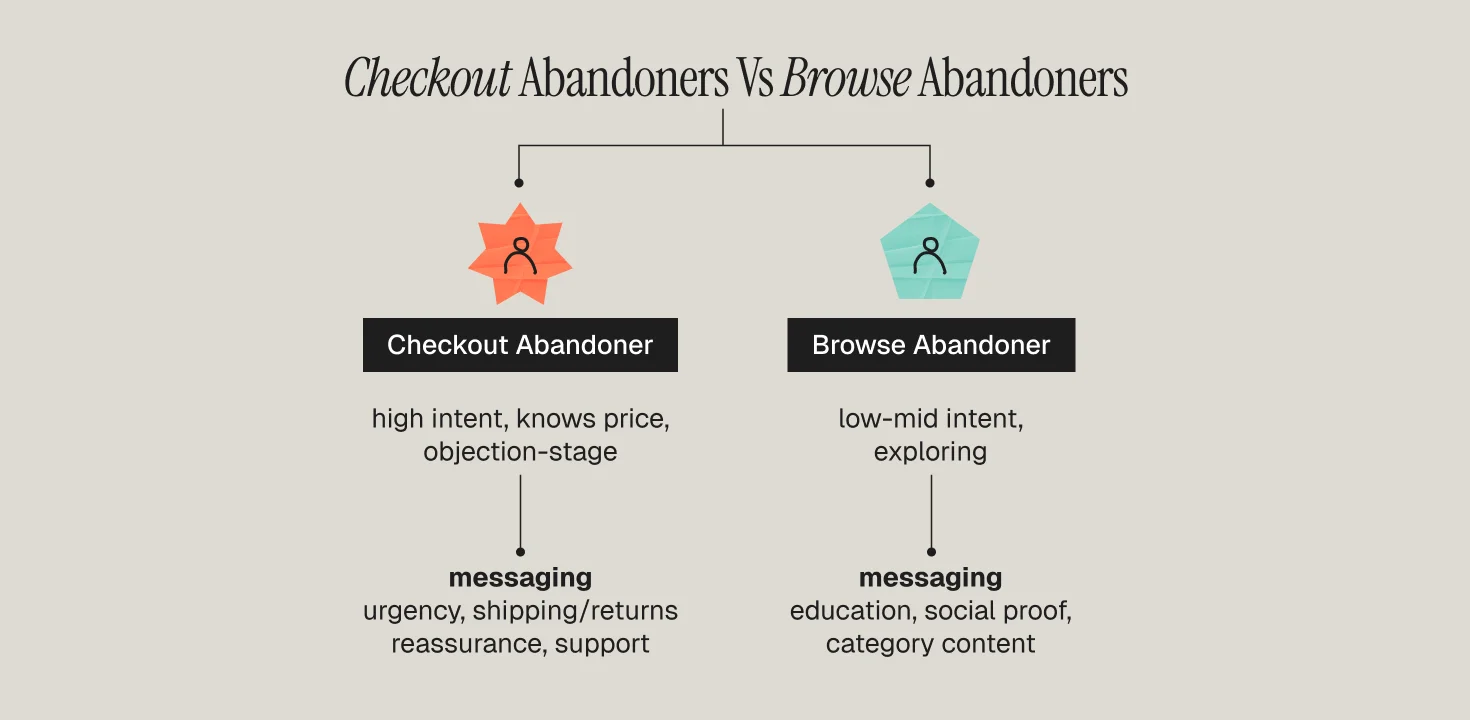
Baymard Institute's long-running meta-analysis puts average cart abandonment around 70%. That makes checkout abandoners the highest-intent segment in your account. The 2026 mistake isn't missing this flow — everyone has it — it's running ONE cart-abandonment flow for two different intent levels. Checkout abandoners know the price and stopped at objections: their flow handles urgency, shipping costs, returns policy, and support access. Browse abandoners are still exploring: their flow educates, shows social proof, and sells the category before the product. Split them in Klaviyo via Checkout Started vs Viewed Product triggers with appropriate filters.
Flow #2: Post-purchase
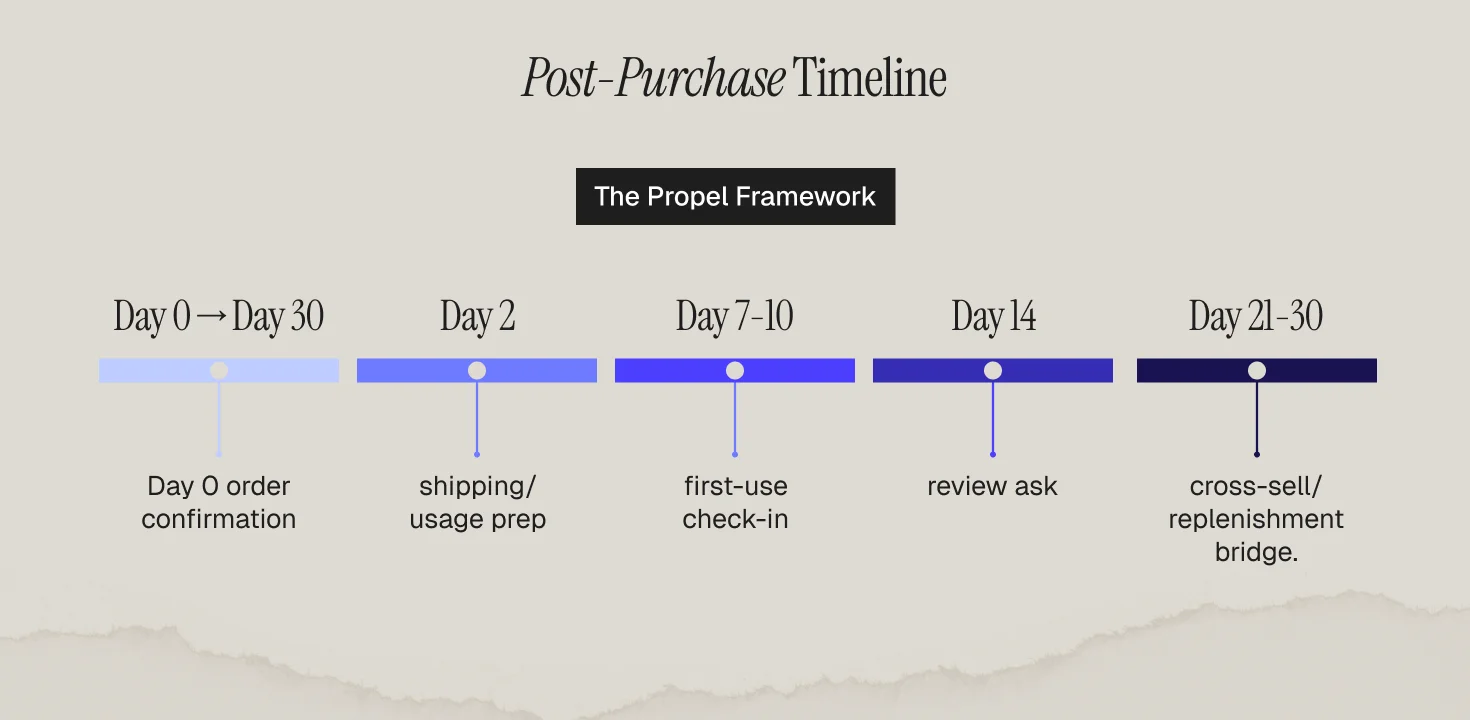
The most under-built flow in DTC. Most brands send an order confirmation and stop. A real post-purchase sequence sets delivery expectations on Day 0, teaches product usage before the box arrives (Day 2), checks in at first use (Day 7-10), asks for the review after first use rather than at delivery (Day ~14), and bridges to cross-sell or replenishment (Day 21-30). The review-timing point alone moves numbers: a review request that lands before the customer has used the product converts poorly and invites neutral ratings. (Building this by hand is painful — here's how to build personalized email flows without the manual work.)
Flow #3: Replenishment
If the product depletes (supplements, skincare, consumables, pet, beauty), replenishment is the closest thing to printing money in lifecycle: trigger on expected depletion date minus shipping time. No discount needed — the flow solves a timing problem, not a price problem. Set the interval from actual reorder-gap data in Klaviyo (median days between first and second order for that SKU), not from the label's suggested usage.
Flow #4: Win-back, segmented by LTV
A one-time discount buyer and a five-time full-price customer should never receive the same "we miss you" email. Segment lapsed customers by LTV tier: high-LTV lapsed customers justify high-effort treatment (a plain-text note from the founder outperforms a 20% coupon for this tier), mid-LTV gets the standard incentive ladder, and low-LTV single-discount buyers get one or two touches before suppression. If lapsing is a structural problem rather than a one-off, fix the root cause with a proper subscription-churn plan. Email marketing's overall economics support the effort: email returns roughly $36 per $1 spent (Litmus).
Flow #5: Sunset
The flow nobody wants to build because it shrinks the list. It also protects everything above it. Mailbox providers grade you on engagement; continuing to mail non-engagers degrades inbox placement for your buyers too. A sunset flow gives non-engagers a final re-permission sequence and then suppresses them. Smaller list, better deliverability, higher flow revenue.
The build order, and why brands get it backwards
Brands build win-back before post-purchase, then wonder why they have so many lapsed customers to win back. The build order above is a leak-plugging order: capture high-intent revenue first (checkout), prevent churn at the moment of maximum goodwill (post-purchase), automate the repeat purchase (replenishment), then recover what still lapses (win-back), and protect the channel itself (sunset). This is the same sequencing logic behind durable subscription retention — and the gap between brands that do it and brands that don't shows up clearly in retention rates by industry.
Benchmarks table
Frequently Asked Questions
What are the best Klaviyo flows for DTC brands in 2026?
In build order: abandoned checkout split from browse abandonment, post-purchase, replenishment, LTV-segmented win-back, and sunset. This order plugs revenue leaks before recovering lost customers.
How many Klaviyo flows should a DTC brand have?
Five core flows cover most of the revenue. More flows are not better; better-segmented flows are better. Add a welcome series and site-specific flows once the core five are tuned.
Should browse abandonment and cart abandonment be separate flows?
Yes. Checkout abandoners are objection-stage and respond to urgency and reassurance; browse abandoners are exploration-stage and respond to education and social proof. One combined flow underperforms for both.
When should you ask for a product review in a post-purchase flow?
After first use, not at delivery. Time the ask to the product's actual first-use window (typically day 10-14 for most DTC categories) rather than the shipping confirmation.
Do replenishment flows need a discount?
Usually no. Replenishment solves a timing problem, not a price problem. Trigger on expected depletion minus shipping time, using real reorder-gap data from your account.
-thumbnail.webp)
