Case Studies
Healthcare Marketing Agency Case Study: 125 Win-Back Conversions for Kiaora Women's Health in 30 Days


Kiaora is a US-based women's health telehealth brand serving patients across BHRT, GLP-1, and Thyroid care. The patient mix made every customer a future cross-sell opportunity — a BHRT patient was a future GLP-1 candidate, a churned Thyroid patient was potentially a year away from BHRT eligibility. But Kiaora had no defensible read on what their lifecycle marketing was actually contributing to revenue.
Propel — acting as their healthcare marketing agency — identified the core leverage point: fix the attribution layer first, then attack the highest-confidence pool of churned and abandoned patients before any new acquisition spend.
A two-pillar lifecycle architecture purpose-built for a multi-product telehealth brand.
Replaced Customer.io's default window with a 24-hour last-touch model. Every campaign result now reads against a baseline both teams trust.
Segment definitions tied to specific behavioural events — churned vs abandoned by product line, cross-sell triggers, refill nudges. This wasn't a campaign; it was an architecture.
Patient journeys across BHRT, GLP-1, and Thyroid — routing eligible patients between products instead of letting cross-sell happen accidentally.
Cross-validated every reported number against Stripe and Kiaora's internal GrowthOS dashboard.
When Kiaora engaged Propel as their marketing agency for healthcare, three pain points were stacked on top of each other:
The growth lead was watching new-patient acquisition in a separate dashboard (Stripe + GrowthOS) and seeing a disconnect with what Customer.io reported. Before any lifecycle work could prove ROI, the measurement layer had to be defensible.
Propel structured the first 30 days around two explicit pillars and de-prioritised everything else.
Event-based campaigns tied to abandoned cart by product, churn by product, refill due, and eligibility unlocked. Each pillar got its own segment definition and its own conversion-event definition.
Lifecycle automation across the patient journey — cross-sell GLP-1 ↔ BHRT, refill nudges with copay context, Thyroid screening prompts for BHRT patients past a tenure threshold.
What we deliberately didn't do in the first month: rebuild the welcome flow, touch onboarding, or run new acquisition experiments. The highest-value reservoir was already existing — churned and abandoned patients with proven intent.
Alongside the strategy, we shipped a new 24-hour last-touch attribution model in Customer.io to replace the default window. This wasn't a strategic add — it was a precondition. Without it, every campaign result was contested.
The execution mapped to clear segment definitions and a campaign architecture aligned to Kiaora's three product lines:
For a hormone replacement therapy brand, the win-back pool is the highest-confidence revenue source you have. We built two parallel campaigns:
The GLP-1 product family had the same churn-and-abandonment pattern but a different price point and patient psychology. Revival campaigns delivered 31 conversions across abandoned and churned segments combined.
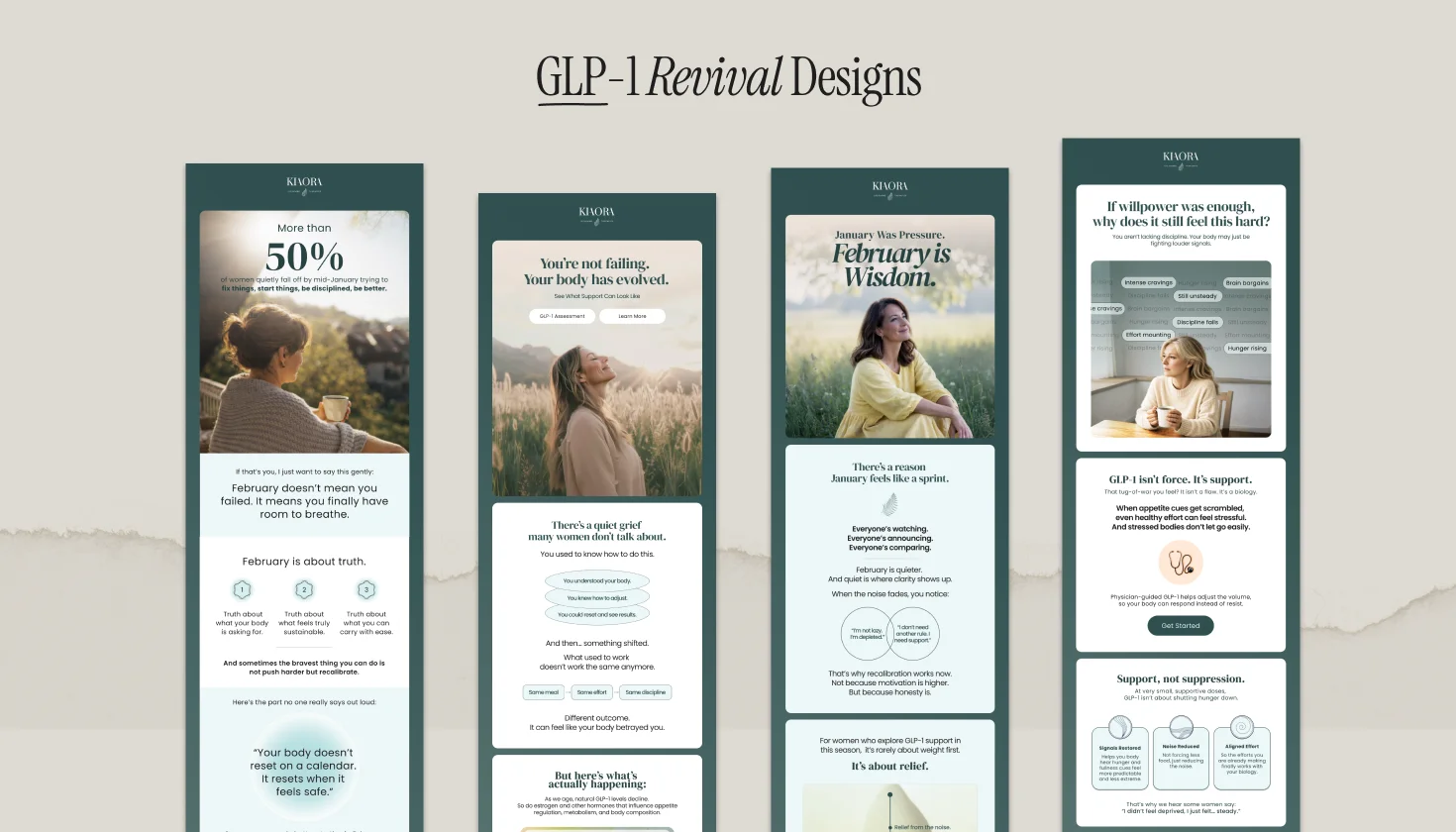
Triggered for patients nearing prescription renewal — the highest-LTV segment in the Kiaora portfolio. Strong April performance feeding directly into the attribution baseline.
Supporting role delivering ~46 conversions in parallel — ensuring first-purchase patients converted into the lifecycle engine immediately.
The conversion definition was locked before any campaign ran: "purchase complete, product category match, repurchase OR first-purchase flow type, within one week of opening any email in the campaign." Locking the definition before the send is the boring part — it's also why the numbers held up when the client cross-checked against their own dashboards.
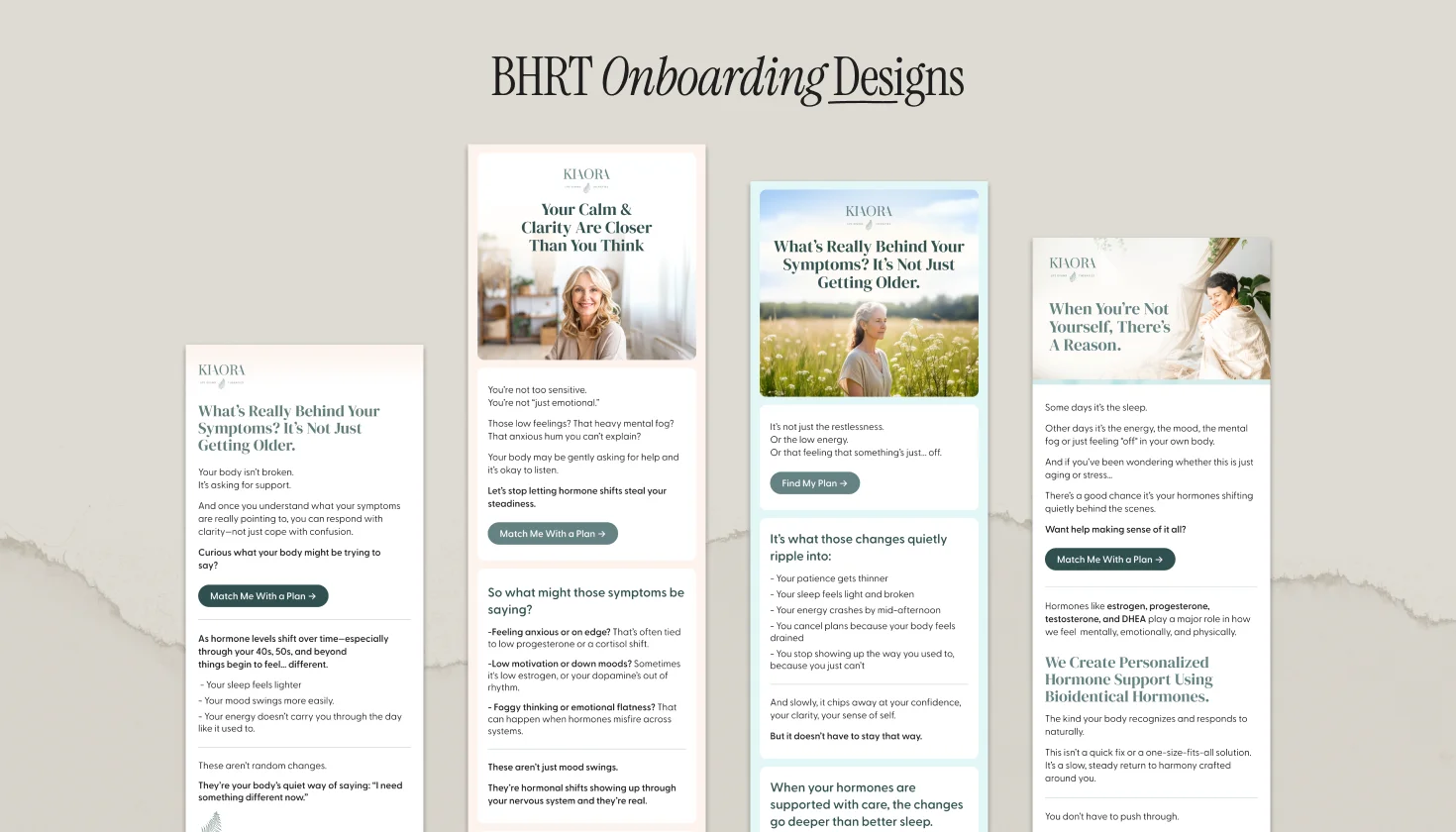
By fixing the attribution layer first and then targeting the highest-confidence pool of churned and abandoned patients, Propel turned Kiaora's lifecycle marketing into a defensible revenue driver.
If you're running lifecycle for a multi-product women's health or telehealth brand, the highest-leverage 30 days isn't always a welcome flow refresh or a new acquisition test. It's two things in sequence:
Win-back isn't a campaign. It's an architecture. Define churn by product, define abandonment separately, lock the conversion definition before the send — and the numbers come.
Our friendly team is always here to chat.
Where your lifecycle flows are underperforming and the revenue you’re missing
How AI-driven personalization can move the needle on retention and LTV
Quick wins your team can action this quarter
Whether Propel is the right fit for your brand, stage, and stack
Calendar not loading? Book directly here
